The Weekend - "Courageous Leadership"

Hi Five Oakers,

Leadership requires courage, whether it's leading your kids, leading in your workplace, leading others to Christ, leading your family through a crisis, or leading in ministry. 

It requires courage because it's never been easy to lead others. Our day brings some special challenges. 

  • The people we lead are bombarded with so many experts with conflicting opinions and with so many ideas that choosing a direction, especially one informed by God's moral vision and mission, is immediately suspect. Who wants to be suspect simply for leading? 
  • Social media has taken arm-chair quarterbacking to all new levels, making it a national past-time and online "haters" a household word. Who wants to be incessantly criticized for every decision? 
  • We have options galore. Researchers have shown how much harder it is to choose when there are many options available. Who wants to say 'no' to so many options simply by saying 'yes' to one? 

Leadership is needed. Our kids, our workplaces, our communities, our world needs leaders who are willing to bring a gospel vision and loving actions into the every day. But it takes courage to lead.

We're continuing our series in Joshua this weekend. Courage in leadership is one of the big themes in Joshua. How many times does God tell Joshua to "be strong and courageous" as he leads the Israelites?

We're looking at Joshua 10:1-28, where Joshua is leading the people of Israel under intense criticism and into a highly questionable battle. 

Joshua shows us what it means and what it takes and what it looks like to lead courageously in times of uncertainty and against insurmountable odds. 

Prayer plays an important role in Joshua's battle, and, as always, prayer is front and center in our worship service. Come to worship. Come to pray with the body of Christ. Come to listen as God speaks through his Word.

Blessings, Pastor Henry
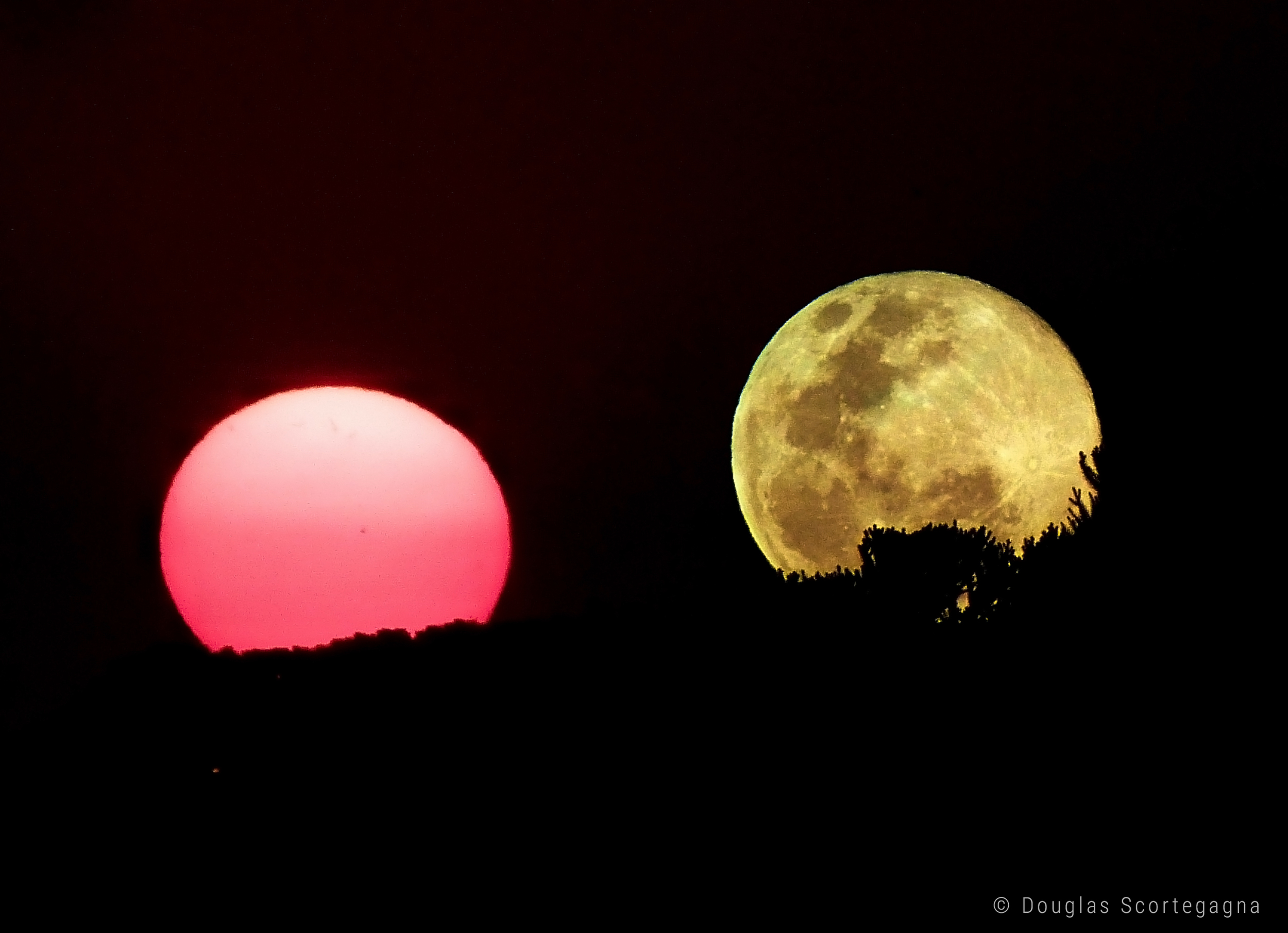
Sun Stand Still

This coming weekend's sermon is on the courage required to lead, as we look at Joshua 10 in our "The Promised Land (Joshua & Judges)" series. 

Joshua's courage is displayed in taking action at a point when whatever action he takes will put him at odds with God. We'll look at that in detail this weekend. This crucial point is often missed, and therefore one of the most powerful applications for leadership in our lives from this text is also missed.

On the other hand, what is often emphasized is Joshua's prayer for the sun and moon to stand still in Joshua 10:12-14. That gets all the press. I'm not addressing it in the sermon. But if I were addressing it, here's what I would say (in case you're interested):

Let me go on the record saying that if the text says God made the sun and moon stand still (or, more accurately, stopped the rotation of the earth), I believe the God who created the heavens and the earth is able to make that happen.

But does the author of Joshua actually intend to say that the earth stopped rotating? Or is this poetical, metaphorical, figurative?

While it may be meant literally, the narrator could very well have been speaking poetically/metaphorically/figuratively. It's pretty complicated, but here's an attempt to give a simple explanation of why this might be taken figuratively.

  • The narrator of the episode marvels at what happened that day in verse 14. You would think he marvels at the miracle of stopping sun and moon in the sky, lengthening the day. But notice what he marvels at instead: "There has been no day like it before or since, when the Lord heeded the voice of a man, for the Lord fought for Israel." He's not marveling that the sun stood still. What he finds incredible is that God heeded the voice of a man. Granted, that might be more amazing to him than the sun standing still, but if the sun stood still, it might warrant a little bit of marveling.
  • The biggest problem with this being a figurative expression, as many suggest, is found in the second half of verse 13. It seems to explain the poetry of v. 12 in literal terms. But the problem disappears if the words in v.13b are also poetic. They are not formatted that way in the ESV, but the Hebrew grammar certainly allows for these words in fact to be poetry quoted from the Book of Jashar. It could be rendered  as follows (poetic passages bolded):
“Sun, stand still at Gibeon,
and moon, in the Valley of Aijalon.”
And the sun stood still, and the moon stopped,
until the nation took vengeance on their enemies.
Is this not written in the Book of Jashar?                                                                        
The sun stopped
in the midst of heaven.
and did not hurry to set
for about a whole day
  • There are several OT passages that speak in these kind of cosmic, figurative terms in light of what God is doing on earth (e.g., Judges 5:20) One of the closest parallels is found in Habakuk 3:11: 
The sun and moon stood still in their place
    at the light of your arrows as they sped,
    at the flash of your glittering spear.

If I wrote the following, "He moved heaven and earth to get to her. As it says in his journal, 'I will move heaven and earth to find and save my daughter,'" maybe future interpreters will trip over how to understand that, but you and I know I'm speaking figuratively. 

The amazing thing, according to this passage, is that God will move heaven and earth (literally or figuratively) to accomplish his purposes in response to our prayers. 

Are you praying prayers that pursue God's purposes?